Exit Wounds

Independent field reporting project documenting the long aftermath of conflict - capturing the lives, choices, and resilience of displaced communities across the Middle East and Eastern Europe
Kamil Qadri

Kamil Qadri is a freelance journalist & founder of Exit Wounds, reporting from post-conflict regions across the Middle East, North Africa, the Balkans, and the Caucuses. His ongoing project, Exit Wounds, documents the long aftermath of war, focusing on youth, return, and displacement in Lebanon, Romania, Greece, Turkey, and beyond.
His work combines field interviews, photography, and policy reporting to bridge the gap between lived experience and international response. In recent months, he has conducted on-the-ground reporting inside Lebanon’s Beqaa Valley, covering the politics of refugee return, the collapse of aid networks, and the daily realities of Syrian families navigating an uncertain future.
In December of 2025, Qadri reported from Bucharest on the generation of Ukrainian refugees that have built new lives outside of Ukraine, an important cohort that their nation will depend on for post war reconstruction.
Qadri’s reporting centers on clarity, access, and human context, emphasizing the stories that define recovery after conflict rather than its outbreak. His work is guided by a commitment to accuracy and a belief that journalism should record the aftermath with the same urgency as the event itself.
DISPATCH 1 & 2 UNDER EDITORIAL REVIEWQadri reporting in Lebanon’s Beqaa Valley
FIELD REPORTS
Dispatch One — The Return Dilemma
Full dispatch under editorial review. Out soon
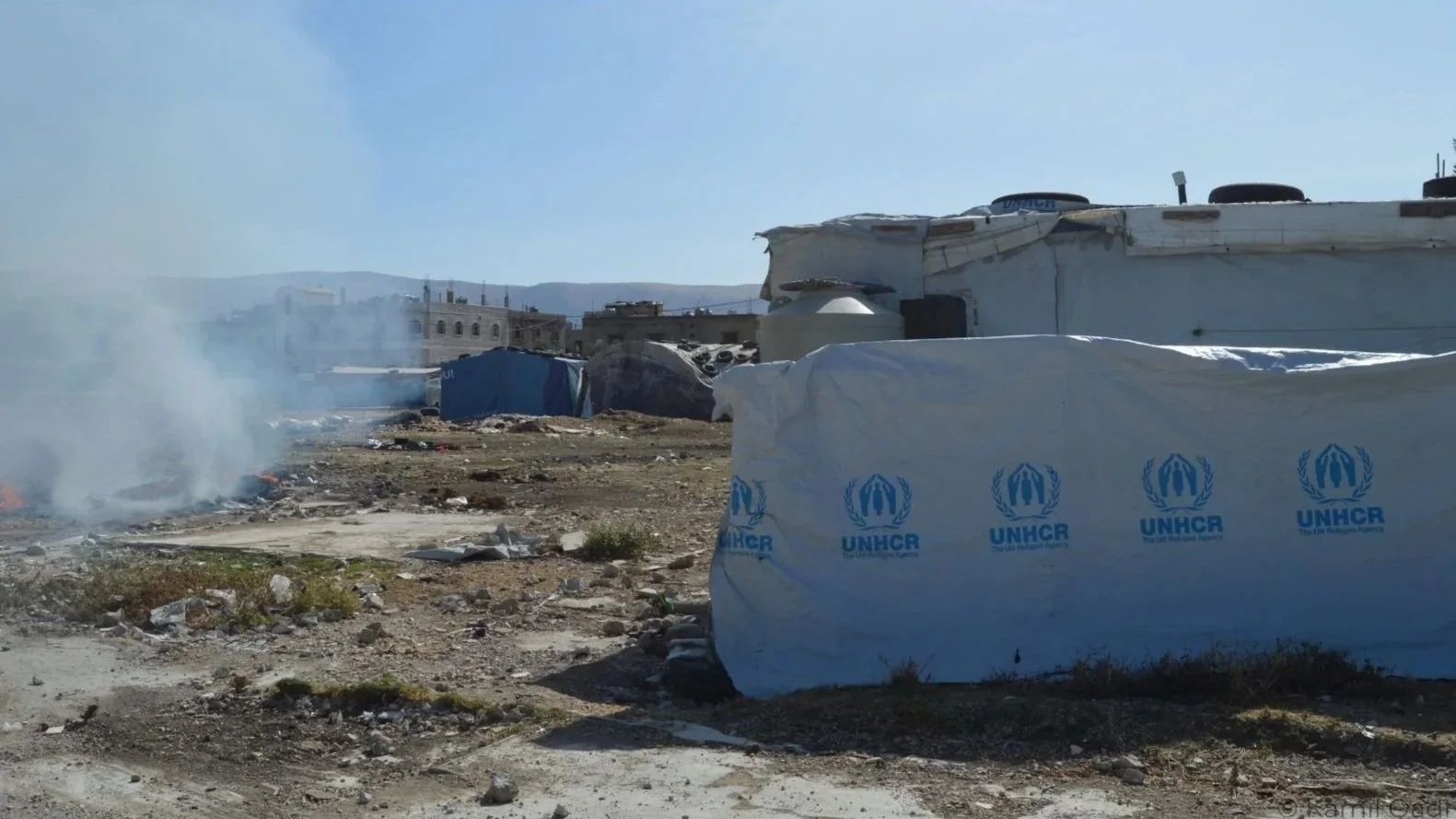
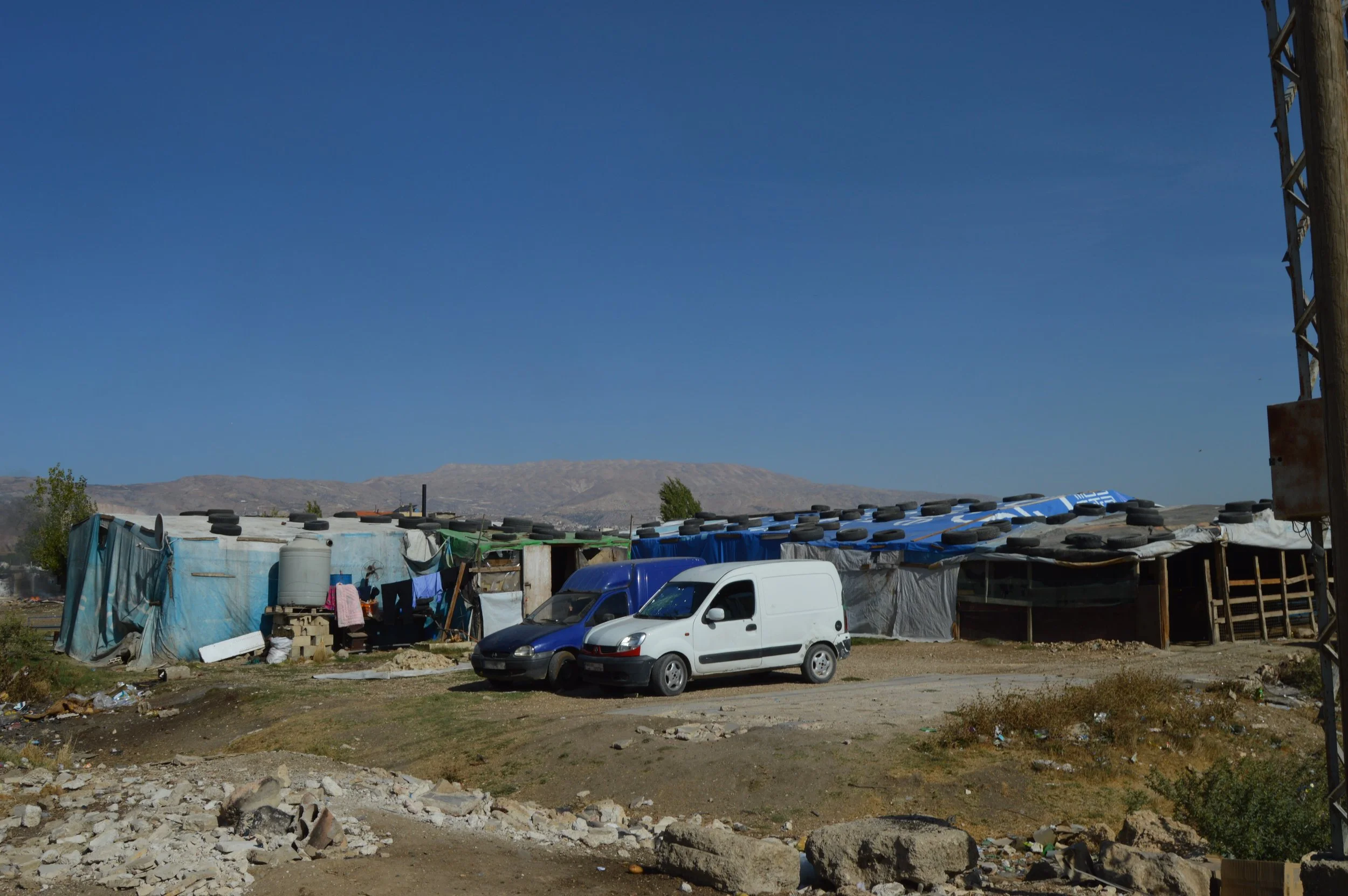
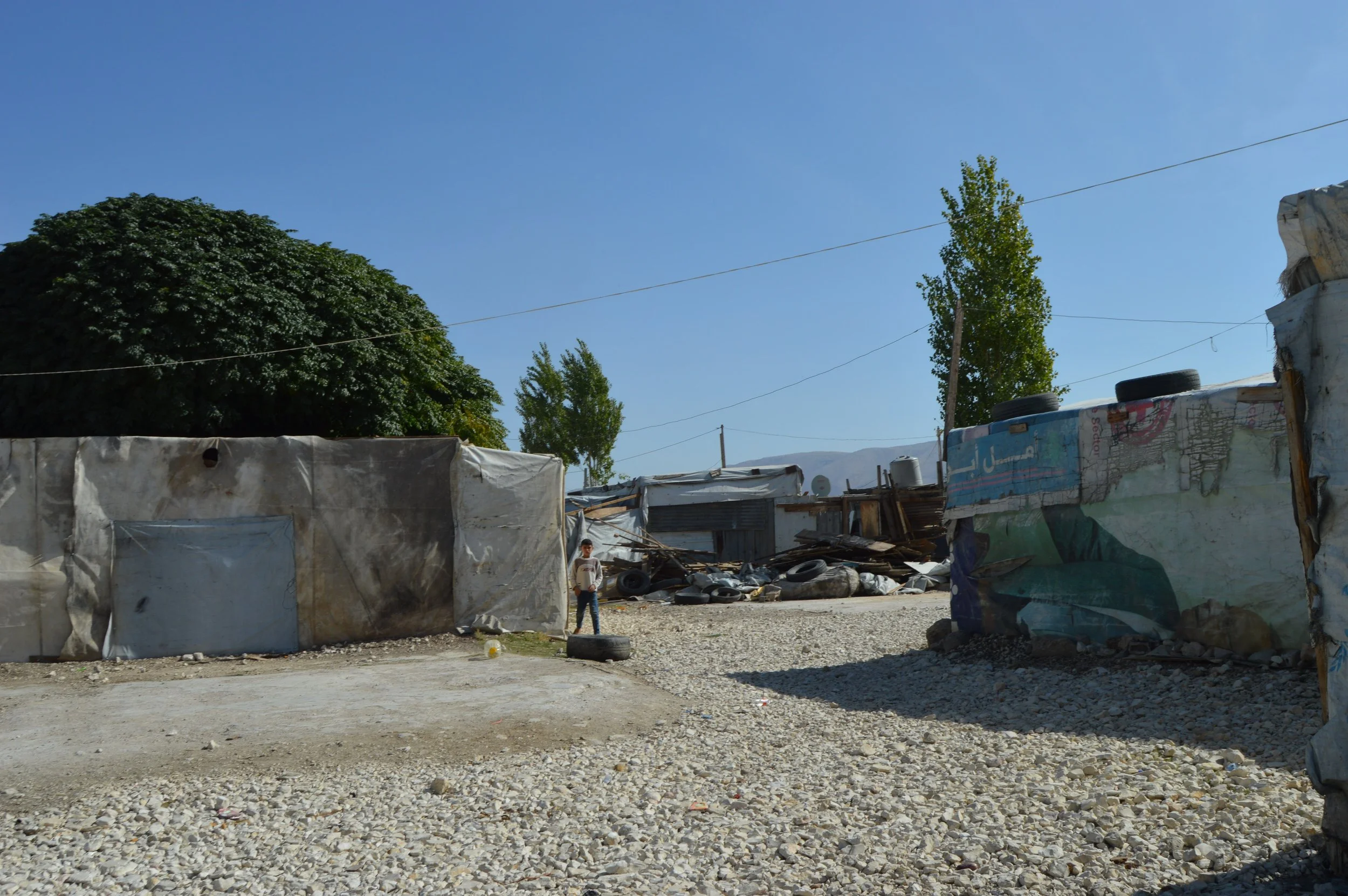
Jurahiya Camp, West Beqaa Valley, Lebanon · October 2025
Text and photography by Kamil Qadri
In Lebanon’s Beqaa Valley, the war in Syria feels both distant and immediate. A decade after displacement, thousands of Syrians remain caught between permanence and return - raising families in tents while the idea of “home” grows abstract. With Lebanon’s economic collapse deepening and the UN promoting a voluntary return plan, refugees now face a moral and practical question: stay in exile or return to a country reborn under a new flag.
The Syrian Arab Republic no longer exists as it once did. In its place, a new government backed by regional powers is attempting to project stability - reopening schools, restoring utilities, and urging citizens to “come home.”
For those still in Lebanon, this message has found its way into conversation. The people I met spoke of this new Syria not through politics, but through the language of necessity. Their belief, or even mild trust, in this government gives it quiet legitimacy.
For Damascus, every returning family is proof that peace has returned; for those who stay, silence is its own form of resistance.
Inside Jurahiya Camp, between Bar Elias and Al Marj, I spoke with young Syrians, teachers, and families weighing that choice. Some trust the new government and plan to go back once homes are rebuilt. Others say they have nothing left to return to, no roofs, no work, and no certainty that this peace is real.
“Syria is not ready for us to go back to.” - Faraj, 23, from Aleppo
“Many Syrians still have hope. We see a real future.” - Rania, teacher at Jusoor Center
Each conversation revealed a different version of survival, shaped less by politics than by exhaustion. Between lessons, odd jobs, and the daily act of waiting, these refugees are redefining what it means to belong. Their quiet decisions - to stay, to leave, or to believe - will decide whether the new Syrian state becomes reality, or remains a promise made to the displaced.
Dispatch Two -“Ukraine’s Lost Generation”
An on-the-ground look at how prolonged displacement is complicating post-war return and recovery for Ukraine.
Bucharest Sector IV, Romania - December 2025
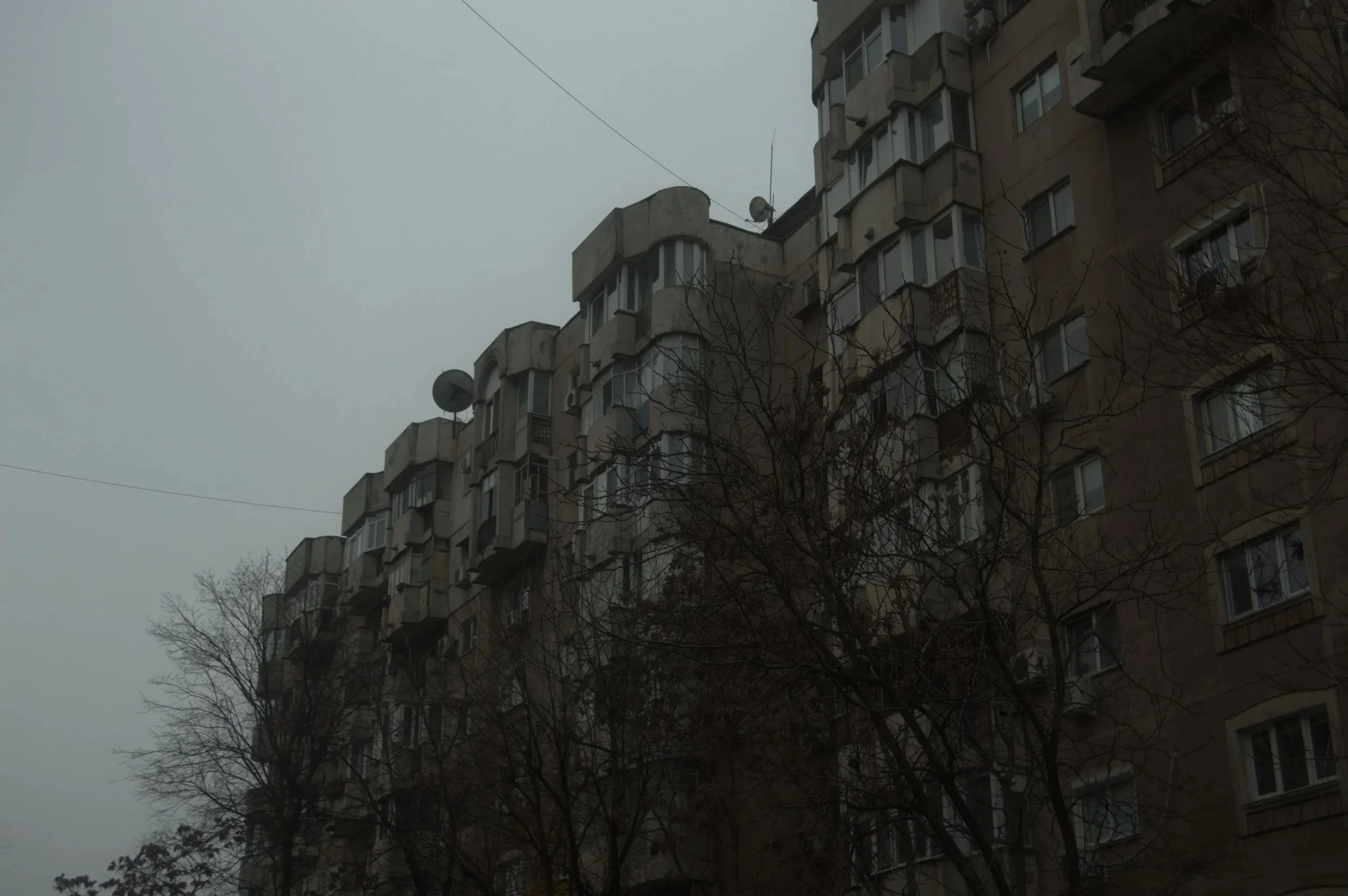
Apartment blocks in Sector IV, Bucharest, now home to many Ukrainian refugees.
I spoke with Hanna, a 16-year-old also from Odesa, who has been in Romania since March 2022. She described the challenges of forced integration and her experiences with locals in Bucharest. Multiple people, she says, have told her to “go back to Ukraine.”
“There is bullying,” Hanna tells me. “Teachers say bad things. Ukrainian children are sometimes separated in class.”
Mariia also mentions cases of vandalism against Ukrainians. “Some people do very bad things,” she says. “Neighbors damage Ukrainian cars.” She declined to comment further.
I learned that some local Romanians believe Ukrainians have a better life in Romania. “They don’t understand that we also had normal lives in Ukraine,” Mariia says. Housing has also become an issue. “Sometimes one room costs twice as much just because you are Ukrainian.”
Hanna tells me about her younger sister, who attends a public elementary school. She says many Romanian teachers separate students in class, with Romanian children sitting in the front and Ukrainian students in the back. “Romanian teachers give bad grades to Ukrainian students,” she says. “This is common.”
Mariia adds that some private schools offer better environments, but the cost makes them inaccessible for many families. As a result, most Ukrainian youth continue to study in public schools across the city, navigating a system that was never designed for years of displacement.
For many Ukrainian families, exile was always imagined as temporary. Parents speak about return as an inevitability, something that will happen once conditions allow. But for their children, the calculation is different. Adolescence has unfolded elsewhere. The years that shape language, confidence, ambition, and belonging have passed outside Ukraine’s borders.
What has emerged in cities like Bucharest is not simply a refugee population waiting to go home, but a generation quietly building long-term lives. Emergency policies introduced in 2022, temporary protection, parallel schooling, short-term housing, were designed to respond to crisis. Nearly four years later, those policies form the infrastructure of everyday life. Decisions once framed as provisional- where to study, which language to learn, which qualifications to pursue- are now shaping futures that may not include return.
Ukraine’s reconstruction is often discussed in terms of infrastructure and security. Roads, bridges, power grids, and institutions will need to be rebuilt. But reconstruction also depends on people. Teachers, civil servants, planners, professionals, and young adults who will carry the country forward. Many of those people are now coming of age elsewhere.
Mariia belongs to that generation. Her education is Ukrainian. Her daily life is Romanian. Her skills, networks, and routines are being shaped outside the country that will eventually need them most.
For Hanna, the idea of return is tied to memory rather than certainty. Ukraine remains home in principle, but not necessarily in practice. “Home is home,” she says, even as she acknowledges that many people will not go back.
Others are more direct. Alena, 18, from Kherson, left Ukraine at fourteen. She arrived in Romania in April 2022. “My adolescence happened here,” she says. She has friends, a boyfriend, and plans to study music. She is learning Japanese and wants to move to Japan. Ukraine is still part of her life, but not the place where she imagines building it.
Across Bucharest, Ukrainian families live in apartment blocks that were once meant to house short-term guests. Children attend schools that were never designed for them. Community centers fill gaps left by national systems. Life continues. Time moves forward.
When the war ends, Ukraine will issue a call that will reach young people who spent their formative years in exile, who learned other languages, adapted to other systems, and built lives shaped by displacement. Some will return. Others will not.
What remains uncertain is whether Ukraine, and the policies governing displacement across Europe, are prepared for that reality. A generation raised in waiting is now growing into adulthood. Whether they see their future in Ukraine will depend not only on peace, but on whether return still feels possible, familiar, and worth the cost of leaving behind the lives they have already begun living.
Nearly four years into the war, tens of thousands of Ukrainians continue their lives outside of Ukraine. Teenagers who fled at thirteen are now applying for college; those who fled at sixteen have nearly completed bachelor’s degrees in Romanian institutions. At the start of the war, the European Union implemented temporary assistance for refugees fleeing to neighboring countries- measures such as continued education for children, community organizations, language classes, and temporary housing.
Now, after almost four years of displacement, these “temporary measures” have become permanent.
In Romania, one organization- the Jesuit Refugee Service (JRS), has focused on youth education, Romanian language classes, and general integration. JRS supports Ukrainian children through a kindergarten program where they are taught Ukrainian, Romanian, and English. For older children, the organization offers music lessons as well as language classes. JRS is run by a group of Ukrainian teachers from various regions of Ukraine, all of whom escaped to Romania at different points throughout the war.
Mariia, 20, from Odesa, teaches a classroom of 25 children. She is pursuing a degree in international relations through her university in Ukraine, with classes held online. I sat down with her in Bucharest to discuss the impact of long-term displacement among young Ukrainians. When asked about her day-to-day life, she says, “Here I volunteer—I help with translations, documents, and I teach English to children.”
Her contributions stress the importance of her generation, and how Ukraine will one day call on this cohort to rebuild the country. It is not a question of if the war will end, but when it does, the eventual ceasefire will result in a mass call for return. The question now is whether they will answer.
When asked about the decision to return to Ukraine, Mariia says she does not think Ukraine will be able to reclaim everyone who grew up outside its borders. A large part of this belief is rooted in memory. Teenagers who make new friends, discover new cities, and learn new languages are inevitably drawn to the places where they associate life with friendship, laughter, and safety.
At the same time, permanent displacement has come with its own consequences.
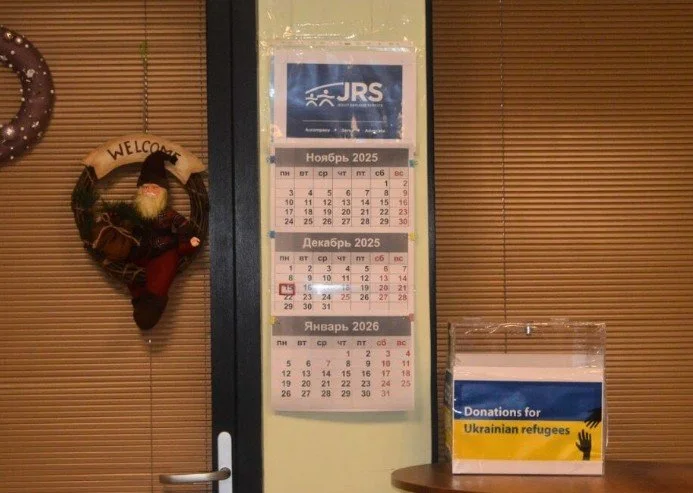
A Ukrainian winter calendar and a donation box for refugees at JRS Romania, Bucharest.
Dispatch: Athens Moves as One - Inside the November 17 Polytechnic March
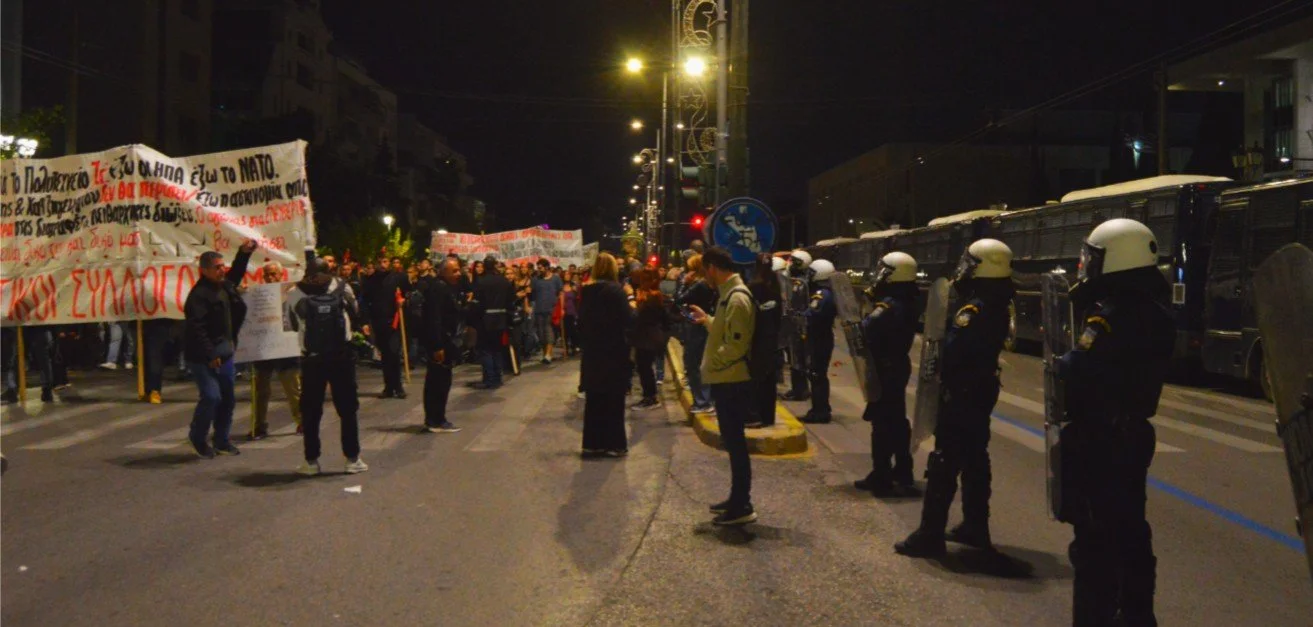
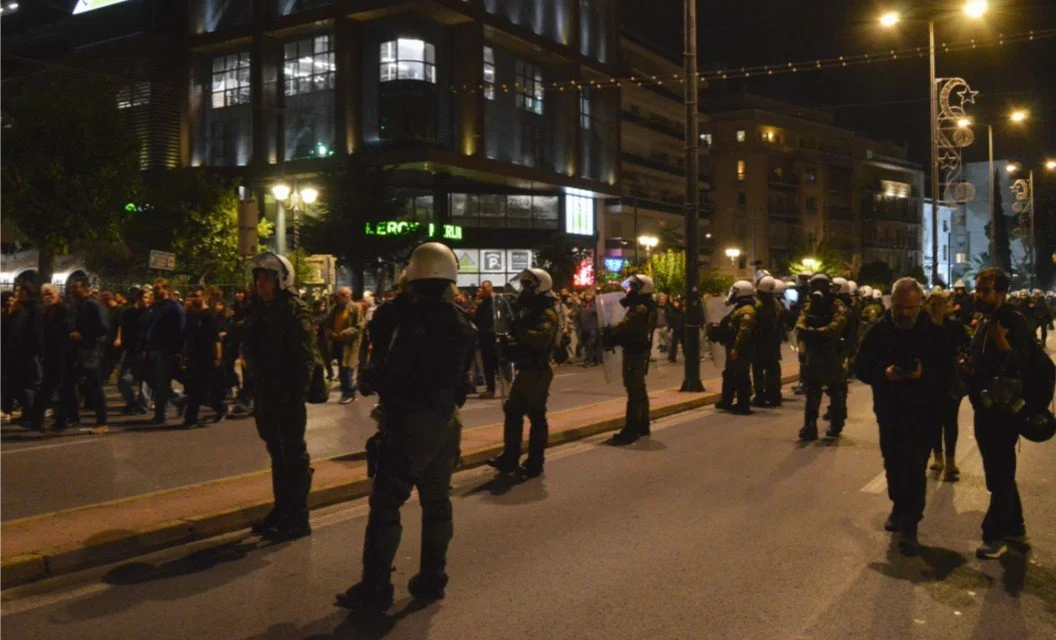
Riot police hold a defensive line on Alexandras Avenue as thousands of protesters pass by
Athens — The air was already heavy on Alexandras Avenue by early evening, long before the march reached the U.S. Embassy. What starts every year as a commemoration of the 1973 Polytechnic uprising has become something more layered: a test of political mood, a measure of how Greece sees its alliances, and a glimpse into which way the city’s younger blocs are leaning.
More than an hour before the front banners arrived, riot police units took up positions along the perimeter streets leading to the embassy.
They stood with the practiced stillness of a force that has done this dozens of times, knowing that the march always stops here, and that everything after depends on the mood of the crowd.
By the time the first clusters of protesters reached the avenue, the crowd had thickened into thousands. Older men who lived through past marches walked alongside students who weren’t born when the first antiauthoritarian blocs took shape. Metal barricades rattled under the weight of people leaning over them for a clearer view.
The march moved in formations, not as a loose flow but as coordinated blocs. The most striking among them was a disciplined, almost paramilitary student contingent: black shirts, helmets clipped to their belts, thick wooden sticks wrapped with red flags
These blocs act as their own internal security, a hallmark of Greek protest culture. They’re loud, sharp, and disciplined, exactly the opposite of how protests look in much of the world. When they move, they move as one.
A few meters ahead of them, the lead banners stretched across the width of the avenue, held up by students stepping in time.

A tightly organized leftist student bloc marches in formation toward the police line.
What stood out this year wasn’t violence -there was none in the areas I covered- but choreography. The flow of people, the measured retreat of police lines as the march advanced, the unspoken rules between blocs and officers who have learned to read one another’s posture.
Side streets filled with families watching from a distance. Some cheered; others filmed; others simply stood with hands in pockets, taking in the spectacle as if it were a ritual, which, by now, it is.
Further behind the main blocs, the scene took on a different rhythm: marchers singing, small groups joking with one another, police walking in parallel
By the time the last groups passed the embassy perimeter, the city had quieted. Only the blinking sirens and the fading chants lingered over the avenue. For a brief stretch, Athens felt suspended - a city reenacting its past while trying to assert its present.
The November 17 march is always about memory. But after watching it up close, it’s also clear that it’s about measurement, of power, of solidarity, of who still shows up and why. And like most political rituals, the real story is in who stands in the street when the lights hit them.
On November 17, I covered the annual Polytechnic march in Athens, documenting the protest from start to finish and photographing interactions between demonstrators, police units, and student groups. These are selected images and field observations captured throughout the day.
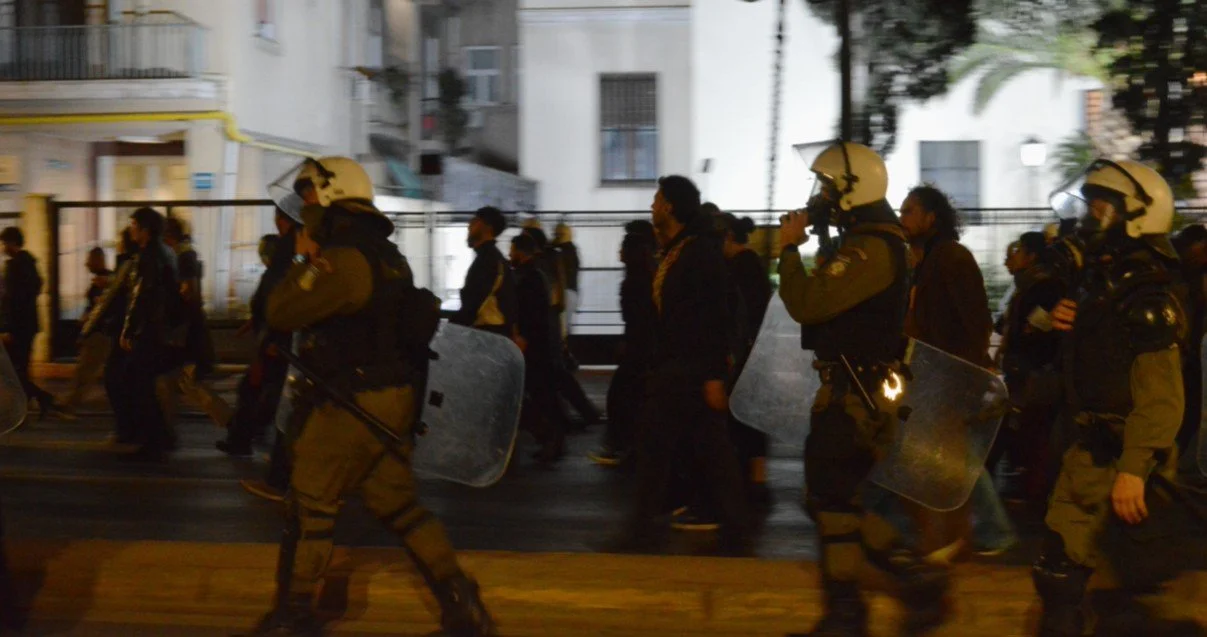
MAT Police walk next to protesters, shields ready to create a barrier in an instant

Fieldwork Gallery
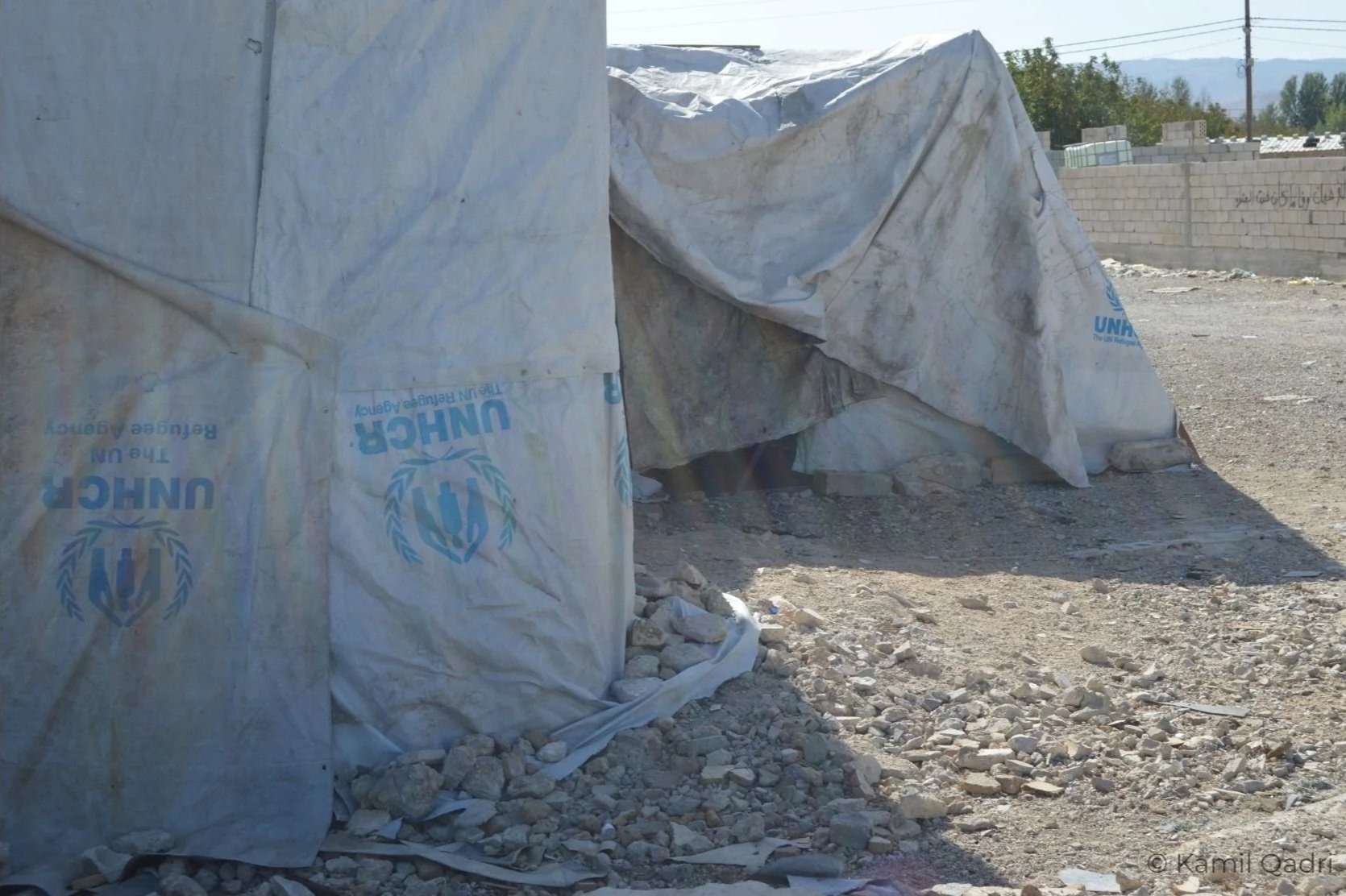
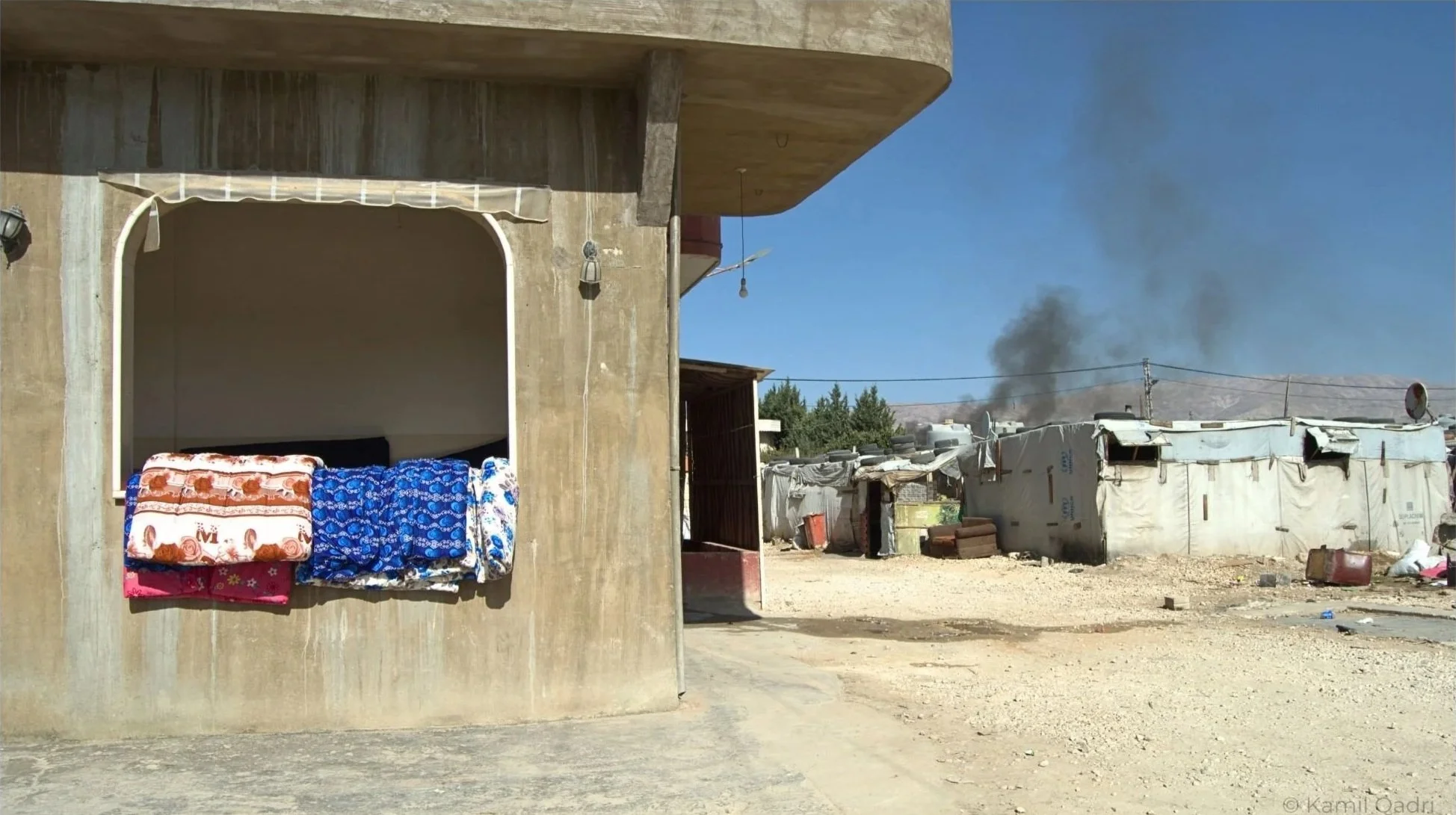
Selected images from the Beqaa Valley, documenting life between displacement and return.
BEQAA VALLEY, LEBANON, OCTOBER 20, 2025





FIELD NOTES
Reflections, impressions, and raw observations from ongoing reporting across Lebanon, Greece, and beyond.
Between assignments, I keep a record of what doesn’t fit neatly into a dispatch - fragments of conversation, field reflections, and moments from the road. These notes are written in real time: sometimes in airports, sometimes in camps, always in motion.
COMING SOON
Contact
For assignments, story pitches, or collaborations, please get in touch below.
𝕏 — @KamilQadri_
in — Kamil Qadri